September Blog: Resilience – At Every Level
There is a lot of attention being focussed on resilience. Why is it important, how can we apply it to our people and the business? Are you, your team, and your organisation resilient?
Resilience, as a definition from the Oxford Dictionary:
“the capacity of people or things to recover quickly after something unpleasant, such as shock, injury, or stress”
The key variables here are ‘people’ and ‘things’. Not that helpful when trying to look at factors that might be unpleasant, such as a shock, injury or stress.
How about at national level? The UK Government Resilience Framework adds context: The core of the Framework is built around three fundamental principles: that we need a shared understanding of the risks we face; that we must focus on prevention and preparation; and that resilience requires a whole of society approach.
So understand the risks, focus on prevention and preparation, and everyone is involved…Of course there is a lot more detail in the Framework and it is worth a read. But how can a smaller enterprise focus on being more resilient?
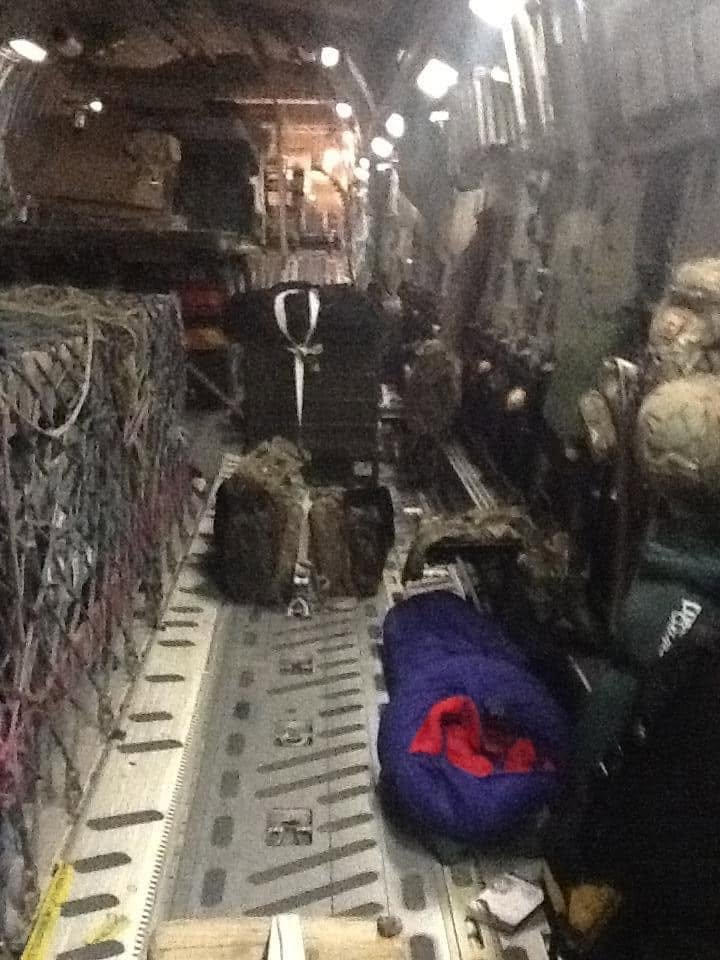
Operating for long hours over many months, under extreme pressure, lots of variables, risks being identified and managed at every turn, pop-up threats… I learnt where my limits were, and those of my team. I can bring these lessons to your organisation.
Personal Resilience. Personal resilience is driven by a multitude of factors, some of which can be influenced such as fitness, personal organisation, coaching and mentoring. Some factors cannot, such as underlying health or injury. When considering personal resilience, it can be scaled across the organisation to become Personnel Resilience. Now we are building strength in numbers, but the volume of factors that cannot be influenced increases. However, if we understand the risks, we can manage and mitigate. There are some tangible methods to prepare personally, and more broadly prepare your personnel, for the challenges ahead. When the challenge hits, it is too late to prepare. You are now in response mode; are you ready?
Organisational Resilience. A much bigger undertaking, but with more control levers to pull, if the organisation takes resilience seriously. Personnel resilience is a given, but it is required to deal with the response and recovery using processes across the business which look at the wider range of risks that are likely to be faced, both internal and external.
Some key themes required for Organisational Resilience
Ownership and Accountability – Top Down and Bottom Up. The organisation needs to understand the need for resilience. Lack of commitment at any level is a gap where risks can become issues. Buy-in and backing is required at every level. This is about people.
Enterprise Wide. Resilience requires a policy, plans, training, exercising, and post event learning. That which can be influenced should be – actively. That which cannot be influenced requires preparation to allow the fastest possible prioritised recovery. Policies and Plans in SharePoint or in a filing cabinet (IT outage resilience anyone?) that are not familiar, reviewed, updated, and exercised, are far less effective when the crunch comes.
Threat and Hazard Vectors. Some threats and hazards can be mitigated with specific risk management protocols. Prevention is better than cure. But recovery from events beyond your control requires agility, responsiveness, and practice.
Threats. Malicious risks. They are out to get you; are you protected and ready? Insider threats, external threat actors, targeting reputation, finance, safety and security, capability, intellectual property, physical property, your people, your interests.
Hazards. Non-malicious risks. Protection and recovery are key. Extreme weather, flooding, wildfires, accidents, natural outbreak of disease. Targeting people, infrastructure and facilities.

Snow fall in Finland – Helsinki Airport. Resilience to bad weather takes preparedness investment, training, and practice.
g2alpha Ltd can help you with the steps to take
What is your approach to Horizon scanning and monitoring threats and hazards? How does your organisation identify and manage risks? How often are risks reviewed and mitigations checked as effective? Have you got tried and tested incident and crisis response protocols? When did you last exercise Business Continuity and Disaster Recovery? Are your staff onboarded thoroughly? Are they trained for resilience?
https://www.gov.uk/government/publications/the-uk-government-resilience-framework
July Blog: When Things Go Wrong….
Lessons From Geese – For Business
I was a junior Tornado pilot on my first Tornado tour, flying with an experienced navigator, on a 3 vs 1 training sortie in the UK.
The Aim: Get the most from training. Simulate hitting targets, conduct reconnaissance, survive the threat, get home safely.
The Strategy: Make sure we have the right people (Suitably Qualified and Experienced People), the right assets (aircraft, fuel, training weapons, range slots, low level flying area), and plan for a suitable piece of airspace with suitable weather.
The Plan: Build a scenario to meet training aims, with the resources available, in the time allocated.
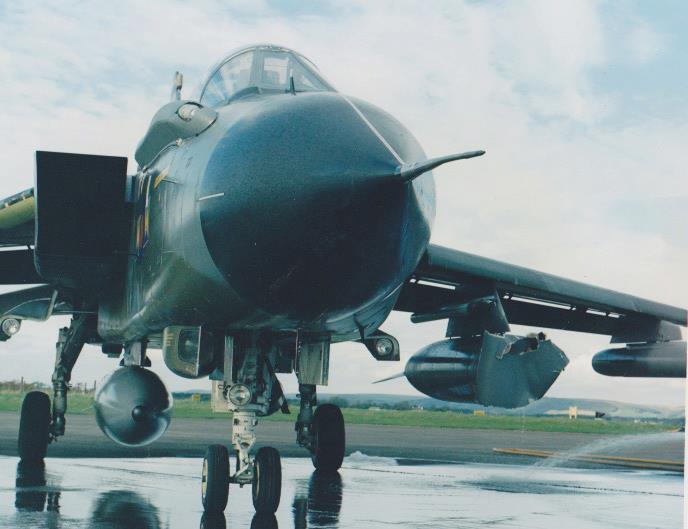
The story behind this sorry sight draws lessons for any leaders and teams in incident management, calmness under pressure, teamwork, and training kicking in.
We were flying low level (250 feet) in the Lake District when a gaggle of geese launched into our path and at least five hit our Tornado. A loud bang, the aircraft slewing sideways, and lots of vibration, indicated things were sub-optimal, not least for the geese.
‘Aviate (fly the aircraft), Navigate, Communicate’ was a well-practiced mantra, followed by ‘sit on your hands’. Many an aircraft and crew had been lost due to rushing into actions before properly assessing the situation.
For business operations:
Negate the nearest immediate threat,
Get to the safest place whilst we figure this out,
Inform with fact, request assistance if required.
Boldface Drills. Actions committed to memory, and regularly tested, to ensure the correct risk mitigations are applied at the earliest opportunity, without referencing notes.
In slower time, when the immediate threat had passed, we checked Emergency In-Flight Reference Cards to ensure immediate actions were correctly carried out, subsequent actions are followed in the logical order, and to guide a plan to recover the situation.
I had practiced emergencies in the simulator with navigators, and in the aircraft on Annual Qualified Flying Instructor Checks. Not once had we practiced dealing with all of the issues now affecting us at the same time; airframe damage causing handling concerns; a fuel leak; pitot tube damage causing instruments to mis-read; uncertainty of the integrity of the engines; potential for a high speed swept, or flapless landing approach; potential short notice or premeditated ejection; a wingman chasing us down to provide an external view of the situation; weather and controlled airspace in mountainous and remote terrain; a short runway with no stopping aids (we still had a fuel leak).
Time compressed and as a team we became busy very quickly, but we kept assessing the situation with aviate, navigate, communicate. We worked through what we were presented with, followed the drills, made and adjusted a plan. We landed safely from a precautionary single engine approach on a short runway, with mid-flaps, still leaking fuel. We de-briefed and reflected on what we could have done better over a single malt in the bar of a local Bed and Breakfast.
Could we have done better? Always. Did we handle every emergency in the future perfectly? No. did we learn enough to help others, and survive a career flying fast jets without ejecting or getting seriously injured? Yes.
Drama needs a known process
So what lessons can be applied to business operation situations?
If you are in a risky business, plan for incidents. We can negate the risk of an incident by not doing the risky stuff. But we are not progressing the capability by not taking the risks. Consider the contingencies, plan a risk management approach and brief the team.
Practice the ‘what-ifs’ with the team at 1g. Train and practice with the team that might be involved. Get their knowledge to an acceptable baseline and expose them to the likely scenarios. Doing this in a controlled and safe environment encourages learning, enables resets, and grows capability. Seeing a drama for the first time at 250 feet and 480 knots is less likely to end in a successful outcome.
Have an incident response process. You are unlikely to predict every scenario but have a range of actions and responses that can be adapted and applied to the situation.
Have an honest debrief and feedback process. Analysis of what worked, but more importantly what could have been better, increases the chance of success the next time, for you, and others.
When things go wrong:
Negate the nearest immediate threat,
Get to the safest place whilst we figure this out,
Inform with fact, request assistance if required.